Why Software Reliability Matters More Than Ever?

Why Software Reliability Matters More Than Ever?

One of the most frustrating things in everyday work is software that starts failing exactly when you need it the most.

– The application slows down. – Login stops working. – The service crashes in the middle of a task. – Work gets interrupted — and so does people’s focus.

A lot is often said about software features, but reliability receives far less attention. In reality, reliability is one of the most important factors affecting the overall user experience.

Reliability Does Not Happen by Accident

Our Coach4Pro software platform has now been running for over a year without any actual service outages.

Along the way, there have been a couple of very short micro interruptions, but they were so brief that users practically never noticed them. The last significant disruption was caused by human error, after which we redesigned our server architecture to make it even more resilient.

This is a good reminder that reliability is never a finished state. Every incident should be analyzed and used as an opportunity to improve the system further.

Technology Is Only Part of the Equation

A stable service is not built on servers alone.

Behind the scenes, reliable software requires continuous maintenance, active development, effective release and testing practices, and strong quality management processes. Software development is not only about building new features — it is equally about ensuring that existing functionality works reliably day after day.

In many cases, these invisible details are what ultimately determine whether users experience a platform as professional and trustworthy.

There Is No Perfect System

Even when things have gone well for a long time, it is dangerous to become complacent.

Every software service must be prepared for unexpected situations: – a server failure, – a software bug, or -disruption caused by an external service.

That is why one of the most important capabilities is not only preventing incidents — but also recovering quickly when something does happen.

Reliability Builds Trust

When a digital service works reliably, users usually do not even think about it. And that is exactly when software is doing its job well.

Reliability may not be the most visible feature. But in the long run, it is one of the most important ones.

Especially in coaching, learning, and employee development services, technology should support people’s daily work — not create additional frustration.

That is why reliability at Coach4Pro is not a separate project. It is part of everything we do, every single day.

Why Do So Many Digital Coaching Services End Up Underused?

Why Do So Many Digital Coaching Services End Up Underused?

Many coaching and consulting companies recognize the same challenge:

the digital service gets built, but client engagement ultimately remains low.

At first, everything often looks promising. A lot of content is created, the service is launched, and clients are onboarded. But after a while, familiar problems begin to appear:

  • few logins
  • programs left unfinished
  • declining client engagement
  • the service failing to become part of the client’s everyday life

This is one of the biggest reasons why many digital coaching solutions never reach their full potential.

The Problem Usually Isn’t the Content Itself

Most coaching companies have very strong expertise.

The challenge often comes from building the digital service around content instead of coaching.

The platform becomes filled with:

  • videos
  • written content
  • assignments
  • attachments, etc.

But client activation, guidance, and long-term engagement receive far too little attention.

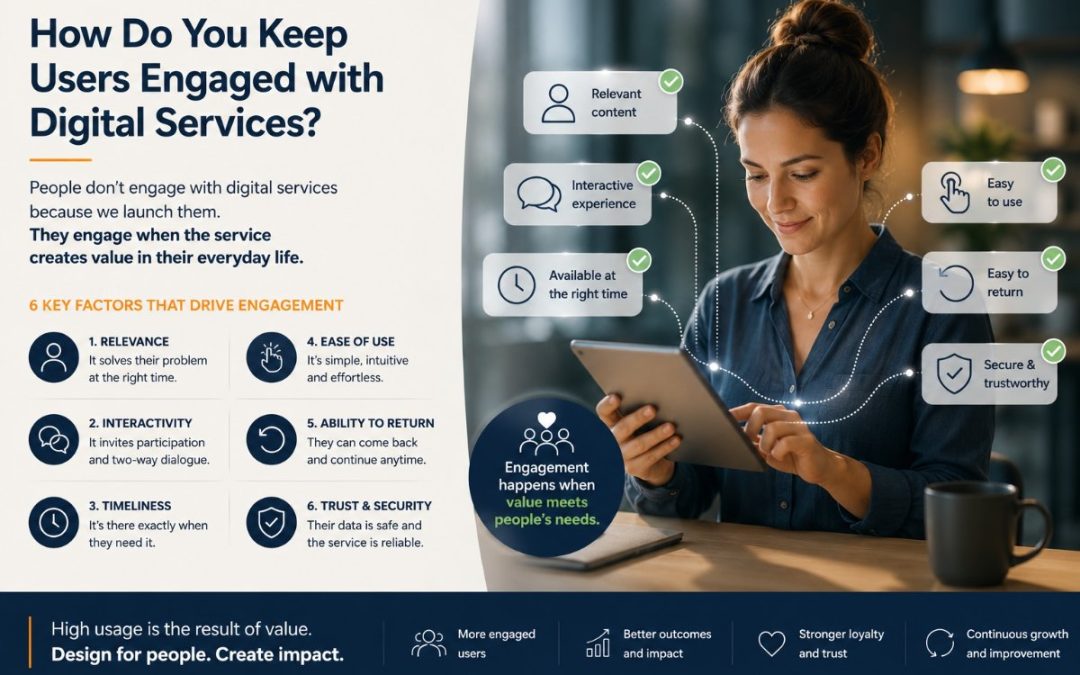
People do not commit to a content library alone.

They commit to an experience, a sense of progress, and the feeling that the service supports their everyday life and personal goals.

Digital Coaching Needs a Coaching-Oriented Structure

At Coach4Pro, we have seen that the most successful digital coaching services almost always share a few key characteristics.

1. Clients Need to Feel There Is a Real Person Behind the Service

Even if the service is digital, clients need to feel that a real coach or expert is involved.

Fully automated solutions often lose their sense of meaning very quickly.

At its best, technology does not replace the coach — it strengthens the coach’s impact and enables continuous support between sessions.

2. Overly Heavy Solutions Reduce Engagement

One of the most common mistakes is trying to build a solution that is too large and complex from the beginning.

In many cases, a better approach is:

  • a clear structure
  • small progress steps
  • approachable content
  • a rhythm that fits naturally into everyday life

When clients experience progress as easy and manageable, engagement increases significantly.

3. Not All Clients Need the Same Type of Service

Clients of coaching companies are in very different situations.

One person may want lightweight self-guided support.

Another may need a more structured program and active coach interaction.

That is why a digital platform should support different service levels:

  • self-guided programs
  • hybrid models
  • coach-led programs
  • ongoing membership models

This not only improves the client experience, but also helps build a more scalable business model.

4. User Experience Matters More Than Many Realize

If the service feels difficult to use, engagement drops quickly — regardless of how good the content is.

A digital coaching platform should be:

  • easy to use
  • mobile-friendly
  • quick to adopt
  • suitable for everyday use

The less friction there is in the user experience, the easier it is for clients to stay engaged.

5. Clients Need to See Their Own Progress

Motivation stays significantly higher when clients feel they are moving forward.

That is why the service should make the following visible:

  • progress
  • activity
  • achievements
  • learning
  • development

When progress becomes tangible, commitment becomes stronger as well.

A Digital Service Is More Than Just a Content Platform

At its best, a digital coaching platform becomes a continuous coaching environment that supports the client’s development even outside scheduled sessions.

At the same time, it helps coaching companies:

  • scale their services in a controlled way
  • build more continuous client relationships
  • improve service quality
  • automate parts of delivery without losing the personal experience

In the end, success is not about how much content the platform contains.

It is about how well the service helps clients stay engaged, committed, and continuously developing in practice.

Do You Want to Build a Digital Coaching Service That Clients Actually Use?

Coach4Pro helps coaching and consulting companies build digital services that support client engagement, continuous development, and scalable business growth.

If you would like to see how different coaching companies are using Coach4Pro to build their own digital services, feel free to contact us.

AI in Coaching Platforms – A Tool or a Risk?

AI in Coaching Platforms – A Tool or a Risk?

The use of artificial intelligence has grown rapidly across many industries. At the same time, new risks have emerged. One of the most well-known is the so-called hallucination, where a large language model generates information that sounds credible but is actually incorrect.

Recently, this has been discussed in the context of legal systems. In some cases, AI has produced references to court cases that never existed. Similar concerns have also been raised in Finland, where AI-generated legal claims have reportedly led to costly outcomes for the person filing them.

This raises an important question:
Who carries the responsibility when AI makes a mistake?

The Role of Humans in Coaching Is Not Disappearing

In coaching services — such as business coaching, performance coaching, and lifestyle coaching — human expertise remains essential.

AI can support coaching in many ways, for example by:

  • analyzing data
  • suggesting exercises or content
  • supporting learning processes
  • automating routine tasks

However, AI does not replace a professional coach. Coaching is built on understanding, interaction, and the ability to interpret complex situations — areas where human expertise remains central.

Platform Architecture Makes the Difference

When AI capabilities are integrated into a software platform, the key question is not only which AI model is used, but how it is integrated into the service.

In a well-designed coaching platform:

  • AI behavior is guided by platform structures and rules
  • AI is not operating as an isolated chatbot
  • customer data remains securely managed within the platform
  • data security and privacy are core parts of the architecture

This is especially important in coaching services, where sensitive and personal information is often involved.

AI Is a Powerful Tool — When Used Correctly

Artificial intelligence creates significant opportunities for coaching services. It can improve scalability, support coaches in their work, and provide new insights from data.

But one principle remains unchanged:

AI is a tool — responsibility remains with humans.

When AI is integrated into a well-designed platform and used to support professional expertise, it can significantly increase the impact and effectiveness of coaching.

Coach4Pro now supports Swedish 🇸🇪

Coach4Pro now supports Swedish 🇸🇪

The Coach4Pro application now supports the Swedish language. The user interface is available in Swedish in addition to Finnish, English, and German.

Swedish language support improves the user experience especially in organizations with Swedish-speaking clients, coaches, and employees. It also strengthens Coach4Pro’s usability across the Nordics and in international environments.

The language can be selected directly in the application, and all key features are fully available in Swedish.

We continuously develop Coach4Pro together with our customers. Adding Swedish language support is another step toward a more accessible and scalable coaching platform.

Two-Factor Authentication Now Available – Enhanced Protection for User Accounts

Two-Factor Authentication Now Available – Enhanced Protection for User Accounts

The importance of data security is constantly increasing, and we want to ensure that our users’ information is as well protected as possible. For this reason, we have added two-factor authentication (2FA) to our service, and it is now available for all users.

What is two-factor authentication?

Two-factor authentication adds an extra layer of security to your account. In addition to your password, logging in requires a separate verification step. This makes unauthorized access significantly more difficult—even if your password ends up in the wrong hands.

How to enable two-factor authentication

Activating 2FA is simple:

  1. Open your profile.
  2. Navigate to “Security & credentials”.
  3. Enable two-factor authentication by clicking “Add 2FA method” and follow the instructions.

Why is this important?

  • Significantly improves account security
  • Reduces the risk of unauthorized access
  • Protects both personal and business information
  • Helps meet modern security requirements

We are committed to providing our users with a secure and reliable service. Two-factor authentication is an important step toward even stronger data protection.

Coach4Pro Now Speaks German!

Coach4Pro Now Speaks German!

We’re happy to share that the Coach4Pro platform is now available in German! This makes it even easier for coaches, organizations, and learners in German-speaking countries to use Coach4Pro in their own language.

But that’s not all — thanks to our Language Management Module, managing multiple languages and different professional terminologies is simple. Whether it’s adapting the platform for local cultures or fine-tuning terminology for specific industries, Coach4Pro gives you the flexibility to make it your own.

This is just one more step in making Coach4Pro the most flexible and customizable SaaS platform for coaching and learning. And we’re only getting started!